The Difference Between SEO And SEM: What You Need To Know?
In the world of digital marketing, terms like SEO (Search Engine Optimization) and SEM (Search Engine Marketing) are often used interchangeably. However, these two concepts have distinct differences and understanding them is crucial for developing an effective online marketing strategy. In this article, we will explore the difference between SEO and SEM, their key components, and how they work together to improve online visibility and drive traffic to your website.
I. Understanding SEO:
SEO refers to the practice of optimizing your website and its content to improve its visibility in organic (non-paid) search engine results. It involves various techniques and strategies aimed at enhancing the website’s relevance and authority in the eyes of search engines. Key components of SEO include:

- On-Page Optimization: This involves optimizing the website’s structure, meta tags, headings, and content to align with relevant keywords and improve user experience.
- Off-Page Optimization: This includes building high-quality backlinks from reputable websites, social media promotion, and online reputation management.
- Content Creation: Producing high-quality and engaging content that meets the needs of your target audience and attracts natural backlinks.
II. Understanding SEM:
SEM, on the other hand, refers to the practice of promoting a website through paid advertising on search engine platforms, such as Google Ads. Unlike SEO, SEM involves paid placements in search engine results pages (SERPs) and is commonly known as pay-per-click (PPC) advertising. Key components of SEM include:
- Keyword Research: Identifying relevant keywords and phrases that users are likely to search for when looking for products or services similar to yours.
- Ad Creation: Developing compelling and relevant ads that appear in search engine results and drive users to your website.
- Bid Management: Determining the maximum amount you are willing to pay for each click on your ads and managing your budget effectively.
III. Key Differences between SEO and SEM:
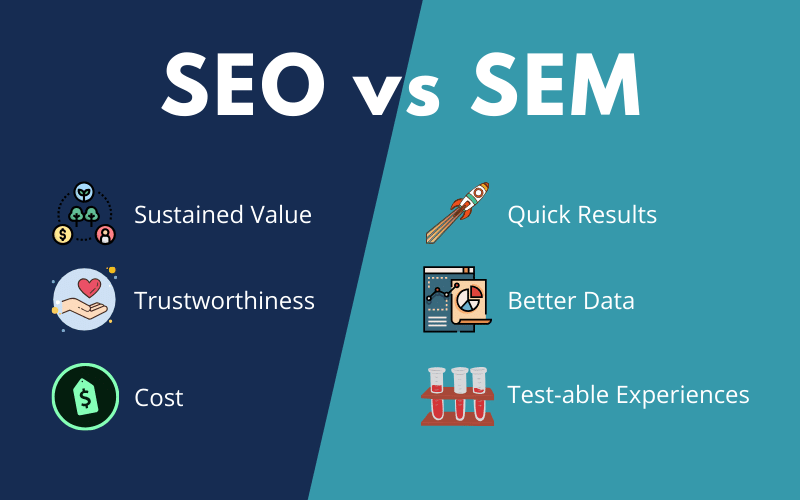
- Cost: SEO is a long-term investment that focuses on organic rankings and does not involve direct costs per click. SEM, on the other hand, requires a budget for paid advertising campaigns.
- Placement: SEO focuses on improving organic rankings and appearing in the main search results. SEM involves paid placements in the form of sponsored ads that appear above or alongside organic results.
- Timeframe: SEO is a long-term strategy that requires time and continuous effort to see results. SEM can provide immediate visibility and traffic once the campaigns are set up.

IV. The Synergy between SEO and SEM:
While SEO and SEM are different, they can work together to enhance your online presence and drive traffic to your website. By combining both strategies, you can maximize your visibility in search engine results and target both organic and paid traffic. The data and insights gained from SEM campaigns can also inform your SEO efforts, helping you identify high-performing keywords and optimize your website accordingly.
In conclusion, understanding the difference between SEO and SEM is crucial for developing an effective online marketing strategy. While SEO focuses on organic optimization and improving website visibility in search engine results, SEM involves paid advertising to drive immediate visibility and traffic. Both strategies have their unique advantages and can be used together to maximize online presence and attract relevant traffic to your website.
Summary of Key Points:

- SEO (Search Engine Optimization) and SEM (Search Engine Marketing) are two distinct strategies used in online marketing.
- SEO focuses on organic optimization, improving website visibility in search engine results through various techniques such as keyword optimization, content creation, and backlink building.
- SEM involves paid advertising, such as PPC (Pay-Per-Click) campaigns, to drive immediate visibility and traffic to a website.
- SEO is a long-term strategy that requires continuous effort and optimization to achieve sustainable organic growth.
- SEM provides more immediate results and allows for precise targeting and control over ad placements.
- While both SEO and SEM aim to increase website visibility and attract relevant traffic, they have different approaches and can be used together to complement each other’s strengths.
- Keyword research is a crucial aspect of both SEO and SEM, helping businesses identify the most relevant and effective keywords to target.
- SEO focuses on optimizing website content, meta tags, and other elements to align with target keywords, while SEM involves bid management and ad optimization for selected keywords.
- Regular monitoring, analysis, and optimization are necessary for both SEO and SEM campaigns to ensure optimal performance and ROI.
- The choice between SEO and SEM depends on factors such as budget, business objectives, timeline, and competition in the target market.
It is important to consider the specific needs and goals of your business when deciding on the appropriate mix of SEO and SEM strategies. Contact our Vietnam team today to learn more about how our agency can support your SEO and SEM efforts.